Compatibility Factors Shaping Live Interaction Quality Across Portable Dealer Platforms
Written by Ulrich Günther · Oct 20, 2026

Compatibility Factors Shaping Live Interaction Quality Across Portable Dealer Platforms
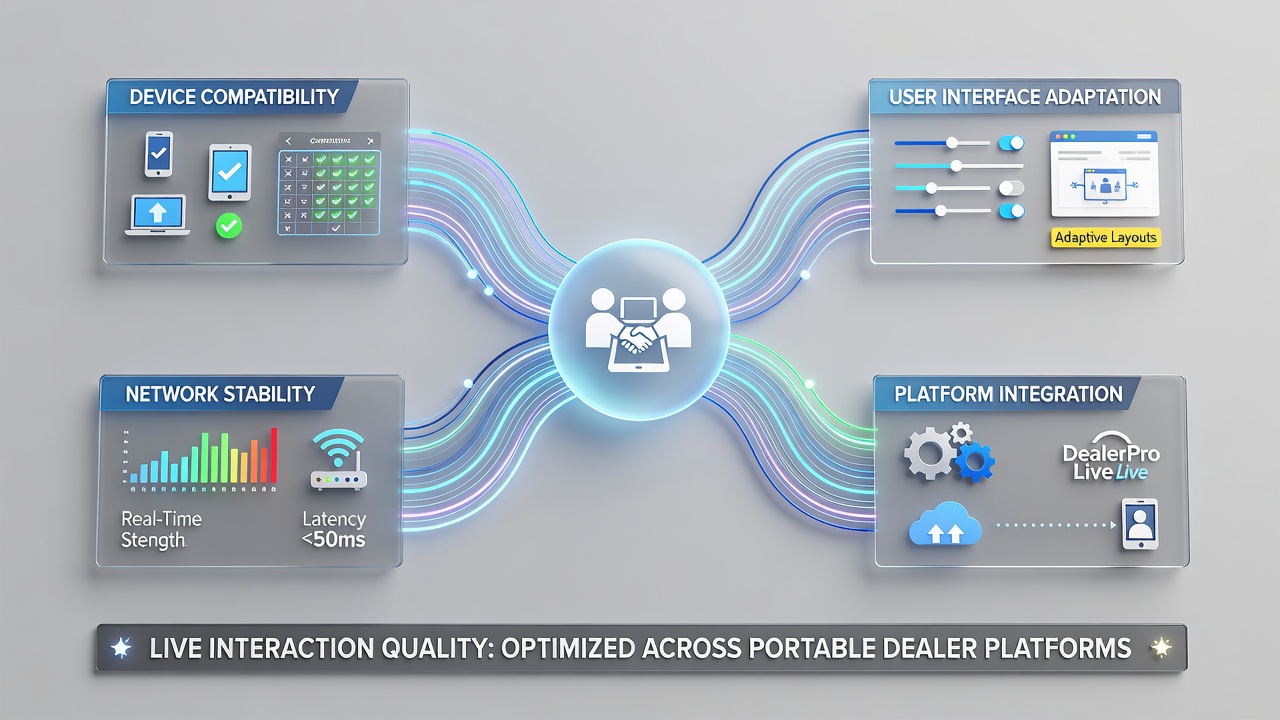
Portable dealer platforms rely on several compatibility elements that determine how smoothly live video streams, real-time chat, and interactive controls function across smartphones and tablets, and researchers have identified hardware specifications as a primary driver of performance consistency since device processors must handle video decoding without introducing lag or frame drops during extended sessions.
Screen resolution and refresh rates also play direct roles because higher pixel densities require more robust graphics units to maintain fluid dealer interactions, while data from industry reports shows that devices released after 2024 often incorporate dedicated media engines that reduce latency by up to 30 percent compared with earlier models when connected to the same live dealer servers.
Operating System and Version Alignment
Operating systems introduce another layer of compatibility variables since iOS and Android updates alter how applications manage background processes and network permissions, and those who track platform performance note that Android fragmentation across manufacturers creates uneven results because certain custom skins restrict access to low-level APIs needed for low-latency video delivery.
Apple's controlled environment allows developers to optimize for specific chipsets more predictably, yet both ecosystems demand regular software patches to maintain synchronization between dealer video feeds and player inputs, and figures released in October 2026 by regional gaming authorities highlight that platforms running the latest major OS versions experience fewer disconnections during peak hours.
Network Infrastructure and Bandwidth Demands
Live dealer sessions transmit continuous high-definition video alongside bidirectional audio and data packets, which means connection stability and available bandwidth become decisive factors, and experts observe that 5G networks deliver measurable improvements in rural and urban areas alike when signal strength remains consistent, whereas older 4G connections often produce visible stuttering once multiple users share the same cell tower.
Wi-Fi performance varies with router standards and interference levels, so portable platforms typically include adaptive bitrate algorithms that scale video quality automatically, and studies conducted by academic institutions in North America and Europe indicate these adjustments preserve interaction quality more effectively than fixed-resolution streams when users move between networks.
Software Frameworks and Integration Protocols
Third-party live dealer providers supply standardized APIs that platforms must integrate correctly, and compatibility issues surface when mobile applications fail to align with updated streaming protocols or when browser-based access encounters WebRTC limitations on certain devices, while developers address these gaps through regular testing cycles that verify audio-video sync across flagship and mid-range hardware.
According to data compiled by the American Gaming Association, platforms that maintain cross-platform libraries report higher session completion rates because the underlying code handles device-specific rendering differences without requiring separate codebases for each operating system.
Interface Responsiveness and Touch Accuracy
Touch input latency affects how quickly players place bets or communicate with dealers, and manufacturers have refined capacitive screen controllers to lower response times below 20 milliseconds on newer models, whereas older devices sometimes register delayed or missed inputs during rapid gameplay sequences, and those who monitor user behavior patterns note that interface scaling for different screen sizes prevents accidental selections when elements resize dynamically.
Audio output compatibility also matters because mismatched sample rates between device hardware and streaming servers create echo or desync, yet most portable platforms now embed automatic calibration routines that adjust on the fly once a session begins, and regulatory updates expected in late 2026 from multiple jurisdictions emphasize testing these features before new titles reach public release.
Security Protocols and Data Handling
Encryption overhead influences overall performance because secure connections must process video and chat traffic without introducing additional delays, and portable platforms balance this requirement by offloading certain cryptographic tasks to hardware accelerators present in contemporary chipsets, while research from the European Gaming and Betting Association shows that optimized implementations maintain interaction quality comparable to unsecured streams under typical conditions.
Conclusion
Compatibility across portable dealer platforms emerges from the combined effects of hardware capabilities, operating system versions, network conditions, software integration, and interface design, and ongoing refinements in these areas continue to support more reliable live interactions as device technology advances and regulatory expectations evolve through 2026 and beyond.